

ABOUT THE ARTISTS
 John Williams, composer. In a career spanning more than five decades, John Williams has become one of America’s most accomplished and successful composers for film and for the concert stage. He has served as music director and laureate conductor of one of the country’s treasured musical institutions, the Boston Pops Orchestra, and he maintains thriving artistic relationships with many of the world’s great orchestras, including the Boston Symphony Orchestra, the New York Philharmonic, the Chicago Symphony and the Los Angeles Philharmonic. Mr. Williams has received a variety of prestigious awards, including the National Medal of Arts, the Kennedy Center Honors, the Olympic Order, and numerous Academy Awards, Grammy Awards, Emmy Awards and Golden Globe Awards. He remains one of our nation’s most distinguished and contributive musical voices.
Mr. Williams has composed the music and served as music director for more than one hundred films. His 45-year artistic partnership with director Steven Spielberg has resulted in many of Hollywood’s most acclaimed and successful films, including Schindler’s List, E.T. The Extra-Terrestrial, Jaws, Jurassic Park, Close Encounters of the Third Kind, the Indiana Jones films, Saving Private Ryan, Amistad, Munich, Hook, Catch Me If You Can, Minority Report, A.I. Artificial Intelligence, Empire of the Sun, The Adventures of TinTin, War Horse, The BFG and Lincoln. Their latest collaboration, The Post, was released in December of 2017. Mr. Williams composed the scores for all nine Star Wars films, the first three Harry Potter films, Superman, JFK, Born on the Fourth of July, Memoirs of a Geisha, Far and Away, The Accidental Tourist, Home Alone, Nixon, The Patriot, Angela’s Ashes, Seven Years in Tibet, The Witches of Eastwick, Rosewood, Sleepers, Sabrina, Presumed Innocent, The Cowboys, The Reivers and Goodbye, Mr. Chips among many others. He has worked with many legendary directors, including Alfred Hitchcock, William Wyler and Robert Altman. In 1971, he adapted the score for the film version of Fiddler on the Roof, for which he composed original violin cadenzas for renowned virtuoso Isaac Stern. He has appeared on recordings as pianist and conductor with Itzhak Perlman, Joshua Bell, Jessye Norman, and others. Mr. Williams has received five Academy Awards and fifty-two Oscar nominations, making him the Academy’s most-nominated living person and the second-most nominated person in the history of the Oscars. His most recent nomination was for the film Star Wars: The Rise of Skywalker. He also has received seven British Academy Awards (BAFTA), twenty-five Grammys, four Golden Globes, five Emmys, and numerous gold and platinum records.
Born and raised in New York, Mr. Williams moved to Los Angeles with his family in 1948, where he studied composition with Mario Castelnuovo-Tedesco. After service in the Air Force, he returned to New York to attend the Juilliard School, where he studied piano with Madame Rosina Lhevinne. While in New York, he also worked as a jazz pianist in nightclubs. He returned to Los Angeles and began his career in the film industry, working with a number of accomplished composers including Bernard Herrmann, Alfred Newman, and Franz Waxman. He went on to write music for more than 200 television films for the groundbreaking, early anthology series Alcoa Theatre, Kraft Television Theatre, Chrysler Theatre and Playhouse 90. His more recent contributions to television music include the well-known theme for NBC Nightly News (“The Mission”), the theme for what has become network television’s longest-running series, NBC’s Meet the Press, and a new theme for the prestigious PBS arts showcase Great Performances.
In addition to his activity in film and television, Mr. Williams has composed numerous works for the concert stage, among them two symphonies, and concertos for flute, violin, clarinet, viola, oboe and tuba. His cello concerto was commissioned by the Boston Symphony Orchestra and premiered by Yo-Yo Ma at Tanglewood in 1994. Mr. Williams also has filled commissions by several of the world’s leading orchestras, including a bassoon concerto for the New York Philharmonic entitled “The Five Sacred Trees,” a trumpet concerto for the Cleveland Orchestra, and a horn concerto for the Chicago Symphony Orchestra. “Seven for Luck”, a seven-piece song cycle for soprano and orchestra based on the texts of former U.S. Poet Laureate Rita Dove, was premiered by the Boston Symphony at Tanglewood in 1998. At the opening concert of their 2009/2010 season, James Levine led the Boston Symphony in the premiere Mr. Williams’ “On Willows and Birches,” a new concerto for harp and orchestra.
In January 1980, Mr. Williams was named nineteenth music director of the Boston Pops Orchestra, succeeding the legendary Arthur Fiedler. He currently holds the title of Boston Pops Laureate Conductor which he assumed following his retirement in December 1993, after fourteen highly successful seasons. He also holds the title of Artist-in-Residence at Tanglewood.
One of America’s best-known and most distinctive artistic voices, Mr. Williams has composed music for many important cultural and commemorative events. “Liberty Fanfare” was composed for the rededication of the Statue of Liberty in 1986. “American Journey,” written to celebrate the new millennium and to accompany the retrospective film The Unfinished Journey by director Steven Spielberg, was premiered at the “America’s Millennium” concert in Washington, D.C. on New Year’s Eve, 1999. His orchestral work “Soundings” was performed at the celebratory opening of Walt Disney Concert Hall in Los Angeles. In the world of sport, he has contributed musical themes for the 1984, 1988, and 1996 Summer Olympic Games, the 2002 Winter Olympic Games, and the 1987 International Summer Games of the Special Olympics. In 2006, Mr. Williams composed the theme for NBC’s presentation of NFL Football.
Mr. Williams holds honorary degrees from twenty-two American universities, including Harvard University, The Juilliard School, Boston College, Northeastern University, Tufts University, Boston University, the New England Conservatory of Music, the University of Massachusetts at Boston, The Eastman School of Music, the Oberlin Conservatory of Music, and the University of Southern California. He is a recipient of the 2009 National Medal of Arts, the highest award given to artists by the United States Government. In 2016, Mr. Williams received the 44th Life Achievement Award from the American Film Institute – the first composer in history to receive this honor. In 2003, he received the Olympic Order, the IOC’s highest honor, for his contributions to the Olympic movement. He served as the Grand Marshal of the 2004 Rose Parade in Pasadena, and was a recipient of the Kennedy Center Honors in December of 2004. Mr. Williams was inducted into the American Academy of Arts & Sciences in 2009, and in January of that same year he composed and arranged “Air and Simple Gifts” especially for the first inaugural ceremony of President Barack Obama. In 2018, he received the Trustees Award from the National Academy of Recording Arts and Sciences.
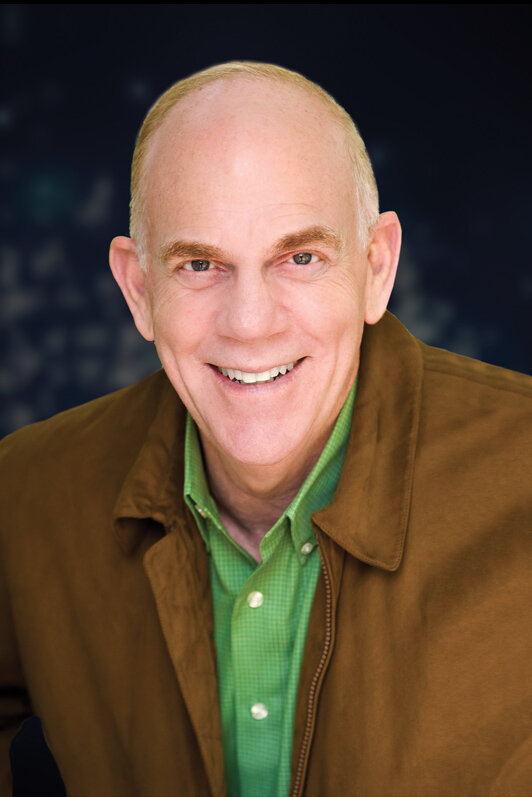 Richard Kaufman, principal pops conductor laureate. Richard Kaufman has devoted much of his musical life to conducting and supervising music for film and television productions, as well as performing film and classical music in concert halls and on recordings. As he concluded his 30th year as Principal Pops Conductor of Pacific Symphony at the end of the 2021-22 season, it was announced that Kaufman was given the title of Principal Pops Conductor Laureate. He is in his 16th season with the Chicago Symphony Orchestra concert series, “CSO at the Movies,” and holds the permanent title of Pops Conductor Laureate with the Dallas Symphony.
Kaufman regularly appears as a guest conductor with symphony orchestras throughout the United States and around the world, including New York, Cleveland, Philadelphia, St. Louis, the RTÉ Concert and RTÉ National Orchestras in Dublin, Indianapolis, San Diego and the Royal Scottish National Orchestra. In September 2018, he made his conducting debut with the Gewandhaus Orchestra in Leipzig. Soon he will make his conducting debuts with the Fort Worth Symphony and the New World Symphony in Florida. Kaufman has had the great honor of sharing the podium on various engagements with John Williams, leading the first half of the performance prior to Williams’ conducting the second half.
In addition to traditional concert presentations, Kaufman often conducts complete film scores in concert, synchronizing the music as the film is shown above the orchestra. These include “Amadeus,” “Casablanca,” “North by Northwest,” “Singin’ in the Rain,” “The Wizard of Oz,” “Psycho,” “Vertigo,” “E.T. The Extra-Terrestrial,” “Jurassic Park,” “The Bride of Frankenstein,” “Pirates of the Caribbean I and II,” “Silverado,” “On the Waterfront,” “Raiders of the Lost Ark,” “Jaws,” “Star Trek” (2009), “Star Trek Beyond,” “Home Alone” and “Star Wars” (various episodes). He also conducts the scores to various silent films.
Kaufman received the 1993 Grammy Award in the category of “Best Pop Instrumental Performance.” He has recorded with the London Symphony, Nuremberg Symphony, the New Zealand Symphony and the Brandenburg Philharmonic Orchestra in Berlin. He also has conducted for numerous performers including John Denver, Andy Williams, Nanette Fabray, Amy Grant, the Beach Boys, Chicago, Chris Botti, Arturo Sandoval and many others. As a studio violinist, Kaufman performed on numerous film and television scores including “Jaws,” “Close Encounters of the Third Kind” and (in a moment of desperation) “Animal House.” He has recorded and performed in concert with artists including John Denver, Burt Bacharach, the Carpenters, Ray Charles and Frank Sinatra.
Kaufman served as music associate to Lionel Newman at 20th Century Fox before joining the music department of Metro-Goldwyn-Mayer Studios in 1984 as music coordinator. For 18 years, he supervised music at MGM, during which he received two Emmy Award nominations. As a unique part of his career, Kaufman has coached various actors in musical roles, including Jack Nicholson, Dudley Moore and Tom Hanks.
Kaufman has conducted numerous theatrical productions, including the 1st National Tours of “Company” for Harold Prince, and “Two Gentleman of Verona” for Joseph Papp and the New York Shakespeare Festival. He also served at Music Director/Conductor for various productions Produced by Edwin Lester for the Los Angeles Civic Light Opera and San Francisco Civic Light Opera.
In 2012, Kaufman received the Distinguished Alumni Award from California State University–Northridge (CSUN), where, as a student, he composed the University’s Alma Mater and Fight Song. He is a member of the music advisory board of the Young Musicians Foundation and is on the board of the Film Music Foundation.
Born in Los Angeles, Kaufman began violin studies at the age of 7, played in the Peter Meremblum California Junior Symphony, was a member of the Young Musicians Foundation Debut Orchestra, attended the Berkshire Music Festival at Tanglewood in the fellowship program and earned a degree in music from California State University, Northridge. His wife, Gayle, is a former dancer/actress in film, television, and on Broadway. His daughter, Whitney, is a singer/actress performing on recordings and in concert with orchestras around the world.
He is proud to be represented by Matthew Oberstein at Opus 3 Artists.
Star Wars Film Concert Series Production Credits
President, Disney Music Group
Ken Bunt
SVP/GM, Disney Concerts
Chip McLean
VP, Disney Concerts
Gina Lorscheider
Supervising Technical Director
Alex Levy – Epilogue Media
Film Preparation
Ramiro Belgardt
Business Affairs, Lucasfilm
Rhonda Hjort
Chris Holm
Music Preparation
Mark Graham
Matthew Voogt
Joann Kane Music Service
Disney Music Library
Operations, Disney Concerts
Brannon Fells
Royd Haston
Business Affairs, Disney Concerts
Darryl Franklin
Phil Woods
Elena Contreras
Addison Granillo
Business Affairs, Warner-Chappell
Scott McDowell
Marketing & Publicity
Lisa Linares
Rebecca Armour
Maria Kleinman
For Booking Inquires: [email protected]